

Shooting
How loud is a gunshot, and how much hearing protection a range day needs
NIOSH measured 155 to 168 dB at indoor ranges. What that means for plugs, muffs and the seal around your glasses.
A gunshot is over in a few thousandths of a second, and that fools people. It does not feel like a long dose of noise. It feels like a crack, and then the ringing. The ringing is the part worth paying attention to.
How loud the range really is
NIOSH measured firearms at indoor ranges and recorded peaks of 155 to 168 dB. For comparison, OSHA's noise standard caps impulse noise at a peak of 140 dB, and NIOSH's range bulletin says firearm peaks pass that line. So even one shot without protection is above the ceiling federal rules set for a workplace.
Indoors it gets worse in a way the numbers do not show. Walls and a ceiling reflect each shot back at you, and you are not the only shooter. A full lane next to yours adds its own peaks to your afternoon.
| What | Level | Source |
|---|---|---|
| Firearms at indoor ranges, measured | 155 to 168 dB peak | NIOSH, Pub. 2010-113 |
| Impulse noise limit in the workplace | 140 dB peak | OSHA 1910.95 |
| Muffs alone at the range study | about 26 dB of reduction | NIOSH, Pub. 2010-113 |
| Plugs and muffs together, same study | about 44 dB of reduction | NIOSH, Pub. 2010-113 |
Why one layer is often not enough
Take the top of the NIOSH range, 168 dB, and the 26 dB that muffs alone took off in the same study. That leaves about 142 dB at the ear, still over the 140 line. That is the reason NIOSH recommends earplugs and earmuffs together at firing ranges, and why its hearing protection page suggests both for impulse sounds.
The two layers do not simply add up. OSHA's shipyard guidance credits 5 dB over the better device when plugs are worn under muffs. In the NIOSH range study the pair did better than either alone, about 44 dB against 26 for muffs. Treat the second layer as a margin you are glad to have.
Passive or electronic
A passive muff protects every second it is on. It also blocks the range officer, so most shooters lift a cup to talk, and that is the moment a shot from the next lane arrives. Electronic muffs fix that habit. Microphones on the cups raise quiet sounds, the circuit cuts the speaker when a loud impulse hits, and the passive shell does the protecting.
The rating of an electronic muff still belongs to the shell. Switched off, our 066 protects like a passive muff with the same NRR. Switched on, you can hear a voice at normal volume and keep the muffs on for the whole session.
A hunting day is a different day
At the range you fire hundreds of rounds in an afternoon. In the field you may fire twice. That is exactly why hunters leave their ears bare: the shot is rare, it comes when you are least ready, and you want to hear the brush move before it.
Electronic muffs answer both needs. Quiet sounds come through louder than your own ears would hear them, a partner can whisper, and the shot that finally comes is cut off at the cup. Slim cups matter here too. A rifle stock pressed to the cheek pushes a fat cup off the ear and breaks the seal at the one moment it counts.
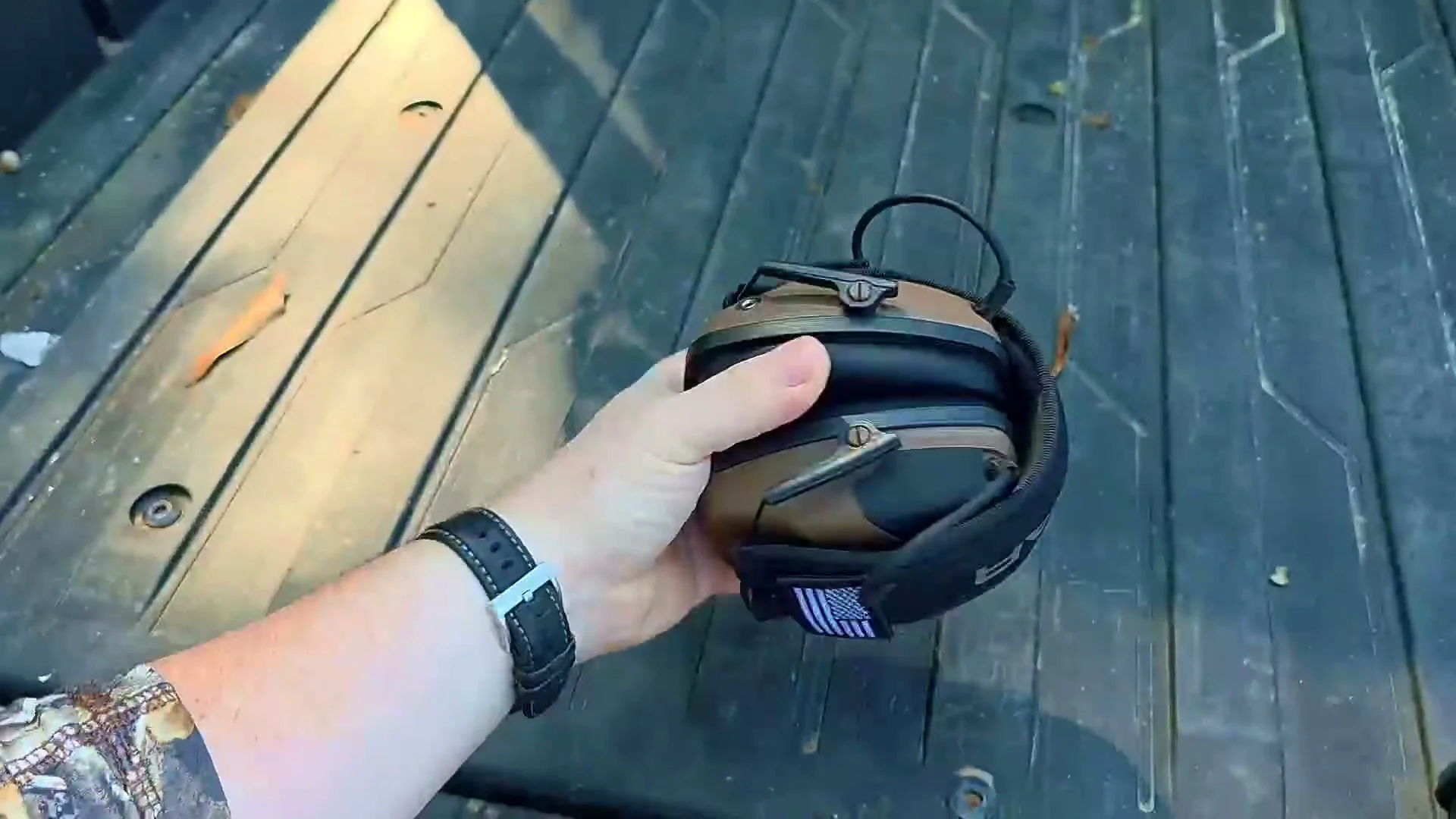
Our shooting guide compares the passive and electronic muffs in our range side by side, by rating, power and cup shape.
Fit is part of the rating
The NRR on the box comes from a lab test that the EPA requires, run to ANSI S3.19-1974. On a real head at a real bench, the seal is the weak point. Shooting glasses lift the cushion where the temple arm crosses it, and NIOSH names eye protection as one of the ways earmuffs lose protection. A cap brim jammed into the band can lift the cups too.
- Tuck the temple arms under the cushion edge, not over it.
- Try gel cushions if your glasses have thick arms: gel molds around the arm.
- Wear the band over the cap or behind the head, not wedged against the brim.
- Push a foam plug in fully before the muff goes on, so the cup closes over a flat ear.
OSHA's own arithmetic in Appendix B, walked through in NRR explained, assumes a protector that is properly fitted and worn. A broken seal costs more decibels than the difference between any two muffs on our shelf.
A short checklist for range day
- Plugs in, muffs on, before you walk through the door to the firing line.
- Electronic muffs switched on, volume set low enough to hear voices, not the air conditioner.
- Spare AAA batteries in the bag, or the rechargeable muffs charged the night before.
- Glasses on first, then the muffs, arms under the cushions.
If your ears ring after a session, something leaked. Look at the seal before you look at a higher rating, and if the ringing stays, see an audiologist.
Written by the PROHEAR team.