

Guide
Hearing protection for shooting: electronic or passive, and when to double up
A gunshot is a short spike of sound, and both kinds of earmuff deal with it. The difference is what you hear the rest of the time.
How loud the range gets
NIOSH measured firearms at indoor ranges at 155 to 168 dB peak. OSHA's noise standard caps impulse noise at 140 dB, and NIOSH's range bulletin says firearm peaks exceed it. ASHA lists hunting and target shooting among the recreational noises that put hearing at risk.
Indoors the walls throw the sound back, and every shooter in the next lane adds to your day. That is why the same muff that feels fine at a rifle line outdoors can feel thin at an indoor pistol range.
Passive earmuffs
A passive muff is a sealed cup and foam. Nothing to charge, nothing to switch on, and the NRR applies every second you wear it. The trade is that you hear a range officer through the same cup that dulls the shot, so most people lift a side to talk.
Our 016 slim muffs are passive, rated NRR 26. Slim cups leave room for a cheek weld on a rifle stock.
Electronic earmuffs
An electronic muff adds microphones and a small speaker in each cup. Quiet sounds, such as a voice, a range command or footsteps, are raised. When a loud impulse arrives the circuit cuts the speaker, and the passive cup carries the protection. Our muffs raise quiet sounds 4x or 5x, depending on the model.
The rating of an electronic muff still comes from the passive shell. Switched off, it protects like a passive muff of the same NRR. Switched on, it lets you keep it on between strings.
Plugs under muffs
NIOSH recommends earplugs and earmuffs together at the range, and its hearing protection page suggests both for impulse sounds. It measured muffs alone at 26 dB and plugs alone at 24 dB of reduction in its range study, and 44 dB with both. OSHA's shipyard guidance credits only 5 dB over the better device for rating purposes, so treat the second layer as a margin, not a sum.
Glasses, hats and fit
Shooting glasses are mandatory at most ranges, and NIOSH notes that earmuffs can interfere with eye protection. Push the temple arms under the cushion edge, not over it, and try gel cushions if your arms are thick. A cap brim pushed up into the band can lift the cups: wear the band behind the head or over the cap, not wedged against it.
Shooting earmuffs in our range
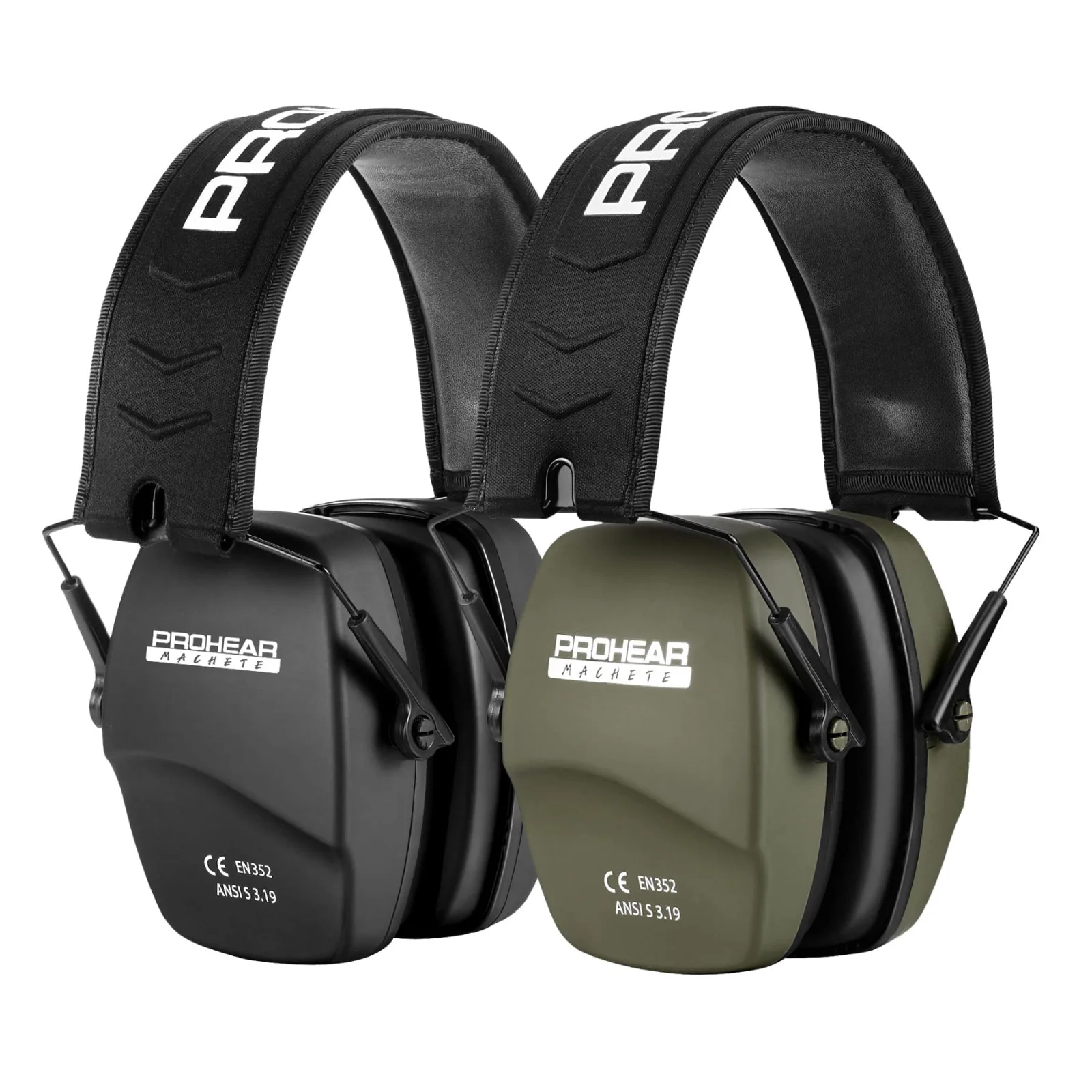 NRR26dB
from $17.86


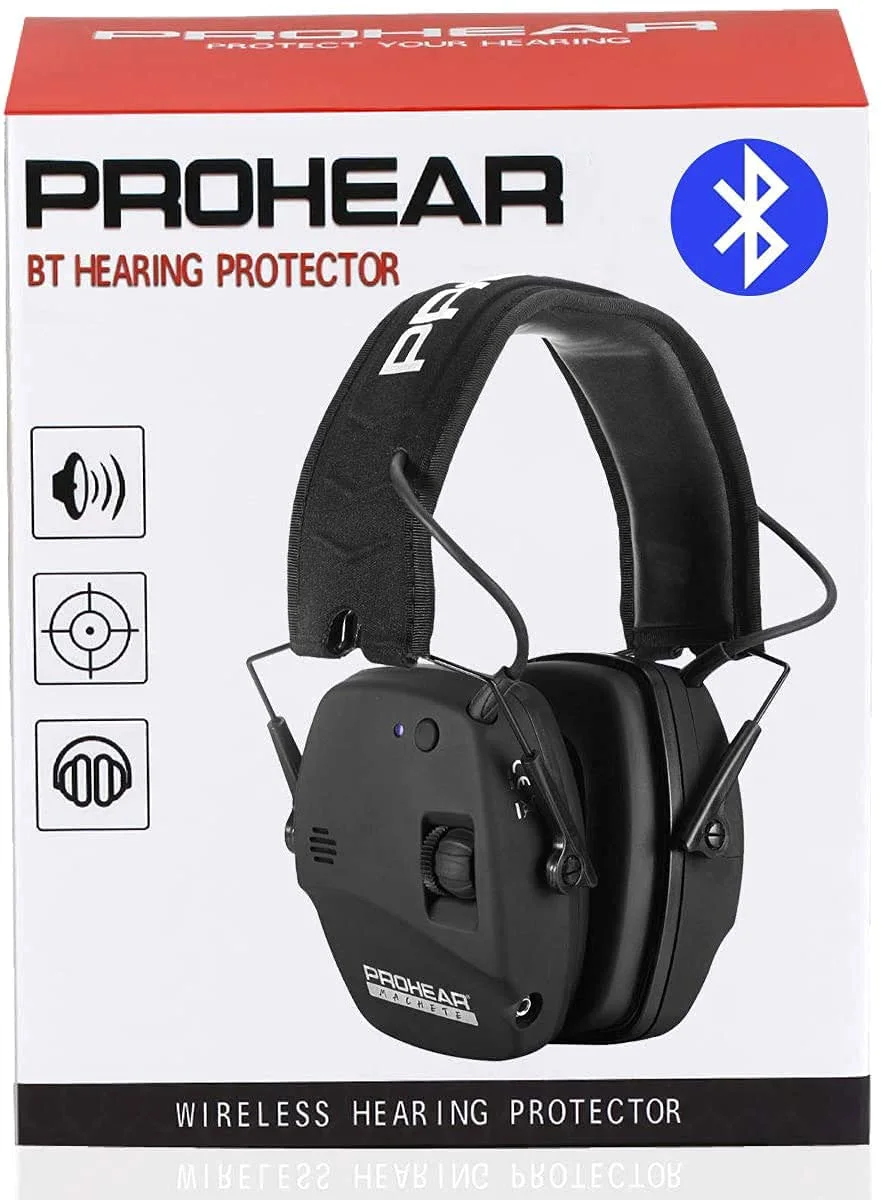 NRR22dB
Bluetooth + electronic · Model 030
PROHEAR 030 Bluetooth Shooting Earmuffs
- Bluetooth 5.4
- 2 AAA
- 4 colors
from $64.59
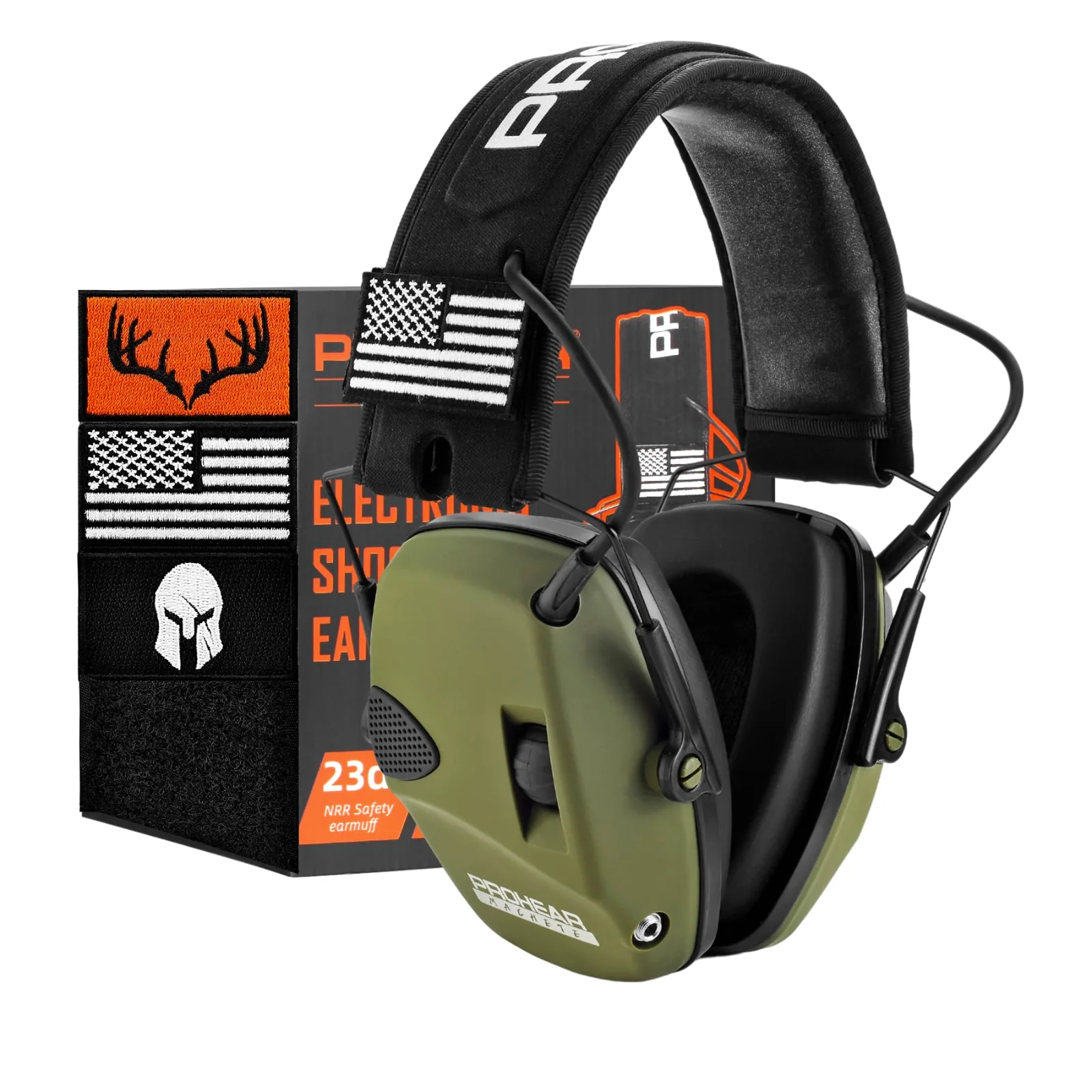 NRR23dB
from $34.99
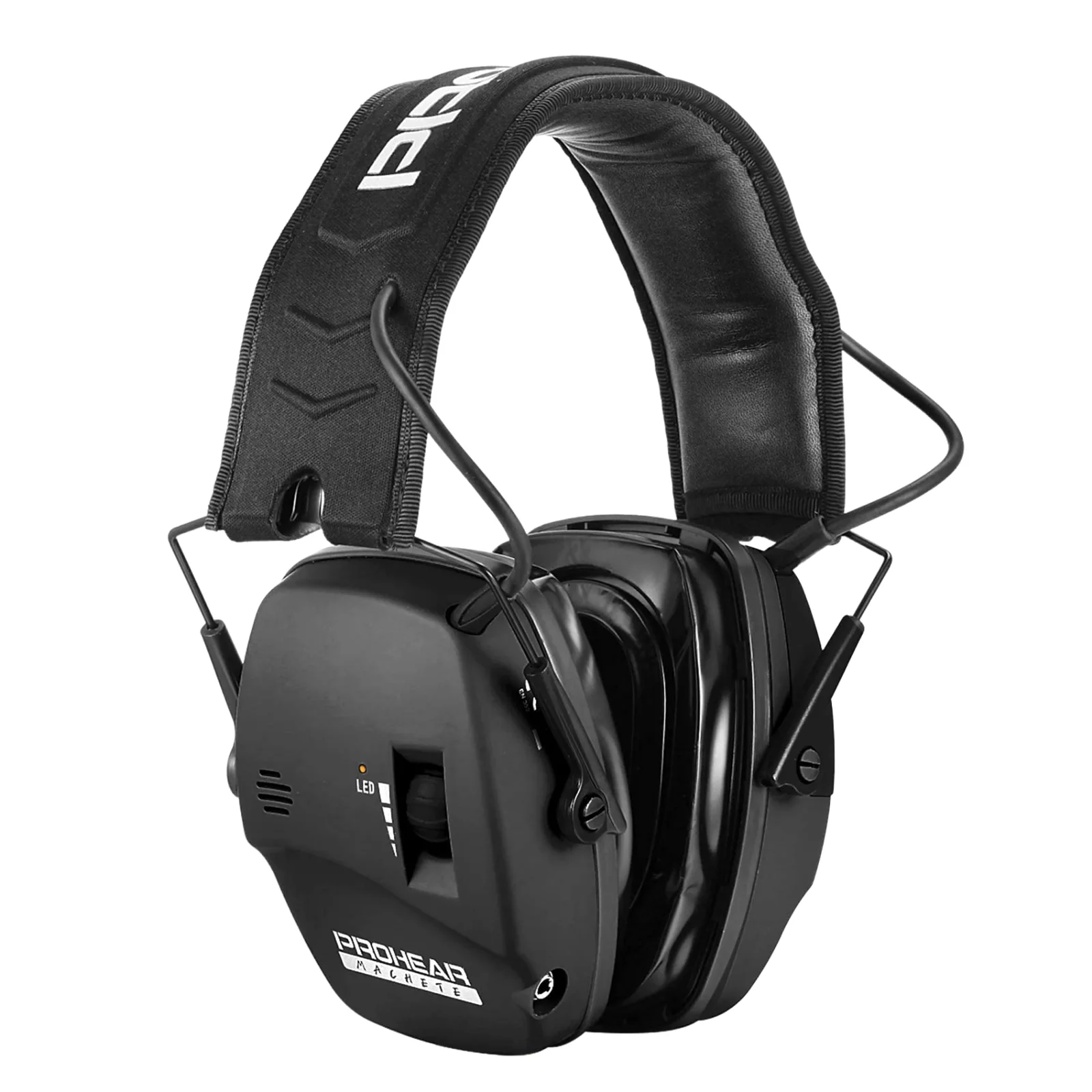 NRR23dB
from $51.99
Every model named above belongs to the PROHEAR lineup.
Shooting guide: questions
Should you choose electronic or passive PROHEAR earmuffs for the range?
If you shoot with others or need range commands, electronic: you keep the muffs on between strings. If you shoot alone and want nothing to charge, passive. The NRR printed for each model tells you the protection of the shell either way.
Do you still need earplugs with electronic earmuffs?
NIOSH recommends plugs and muffs together at firing ranges. Many shooters wear foam plugs under electronic muffs indoors and muffs alone outdoors.