

Guide
Ear muffs for dogs: sizing and getting your dog used to them
Dogs hear more than we do, and many dislike loud noise. A muff can help some dogs, if it is introduced before the noise and not during it.
What dogs hear
The American Kennel Club puts the upper limit of a dog's hearing at about 47,000 to 65,000 Hz, against about 20,000 Hz for people, and says about a third of dogs are sensitive to noise. VCA's veterinary behaviorists give a similar share for noise aversion and name fireworks and thunder among the usual triggers.
Muffs are a tool, not a cure
The AKC's page on loud noises mentions ear muffs made for dogs and stresses introducing them gradually. VCA advises a veterinary assessment for a fearful dog. Our dog ear muffs reduce sound reaching the ear. They do not treat fear, and a dog that panics needs a vet's plan as well.
Sizing
Our dog muffs come in small, medium and large. Measure around the head over the ears and compare with the size chart on the order page, then adjust the head strap and the chin strap so the cups sit over the ear base without pressing on the eyes.
Introducing them
Start days before the noise: show the muffs, reward, put them on for a few seconds, reward, take them off. Build up to minutes during calm time. A dog that first meets the muffs during a storm learns to fear the muffs too.
Dog ear muffs in our range
 NRR28dB
from $37.95


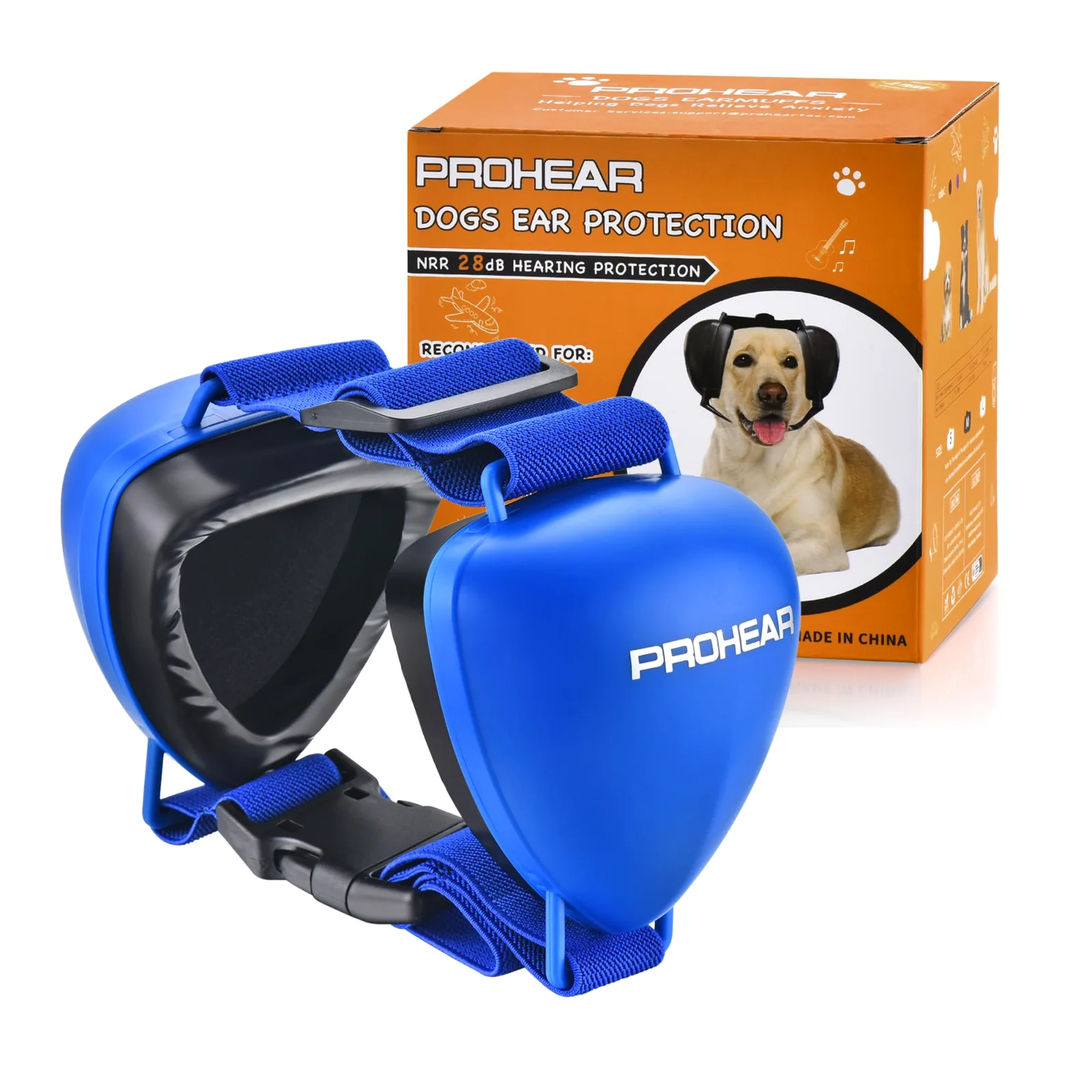 NRR28dB
from $43.99
Every model named above belongs to the PROHEAR catalog.