

Guide
NRR explained: what the number on the box means
Every earmuff sold in the US carries a Noise Reduction Rating. Here is what that number measures and what it does not.
Where the number comes from
The NRR is required by the EPA rule for hearing protective devices, 40 CFR Part 211. The rule says what the label must show and how the figure is measured: in a laboratory, to the ANSI S3.19-1974 test, with the result rounded into a single number in decibels. The rule gives the range of the label as roughly 0 to 30.
A higher number means more noise blocked in that test. That is the whole promise of the label. It says nothing about comfort, fit over glasses, or how a protector behaves after a year in a range bag.
Why your ears get less than the label
The lab fits the protector on trained listeners, carefully, in a quiet room. You will put it on in a hurry, over a cap or a pair of safety glasses, and take it off to talk. OSHA's Appendix B to its noise standard says the estimate holds only for a protector that is properly fitted and worn.
NIOSH has gone further. In its 2025 policy update it recommends measuring the protection each wearer actually gets, called individual fit testing, in place of the old habit of cutting the label figure by a fixed share.
The arithmetic OSHA uses
Noise at work is usually measured in dBA. The NRR is computed on a different weighting, so Appendix B subtracts 7 dB from the label before you compare it with a dBA reading. Take a mower at 95 dBA and a muff rated NRR 26: 26 minus 7 leaves 19, and 95 minus 19 leaves about 76 dBA under the cup, if the seal is good.
You may also meet the rule of halving the NRR. OSHA's 2021 interpretation letter explains that it judges a protector by the unadjusted NRR and uses the 50 percent factor only when it decides whether a workplace needs engineering controls, such as quieter machines.
| Noise (dBA) | NRR on the box | Estimate under the cup |
|---|---|---|
| 95 | 22 | about 80 dBA |
| 95 | 26 | about 76 dBA |
| 95 | 30 | about 72 dBA |
| 100 | 26 | about 81 dBA |
More is not always better
NIOSH's tips for choosing a protector say that about 10 dB of real reduction is usually enough at work, and that too much protection backfires: people who cannot hear a coworker take the muff off. For shooting the picture is different, because a gunshot is an impulse far above any workplace limit.
Two layers add less than you might think. OSHA's shipyard eTool adds 5 dB to the rating of the better device when earplugs are worn under earmuffs, not the sum of both ratings.
Glasses and the seal
NIOSH notes that earmuffs can interfere with safety glasses and some eyeglasses: the temple arm lifts the cushion and lets sound in. Thin arms help, and so do gel cushions, which mold around the arm instead of bridging over it.
SNR, the European figure
Some of our models carry an SNR. That is the rating of the European EN 352 test, a different method from the US label, and usually a higher number for the same muff. We print each figure under its own name and never swap one for the other.
Our models by printed NRR
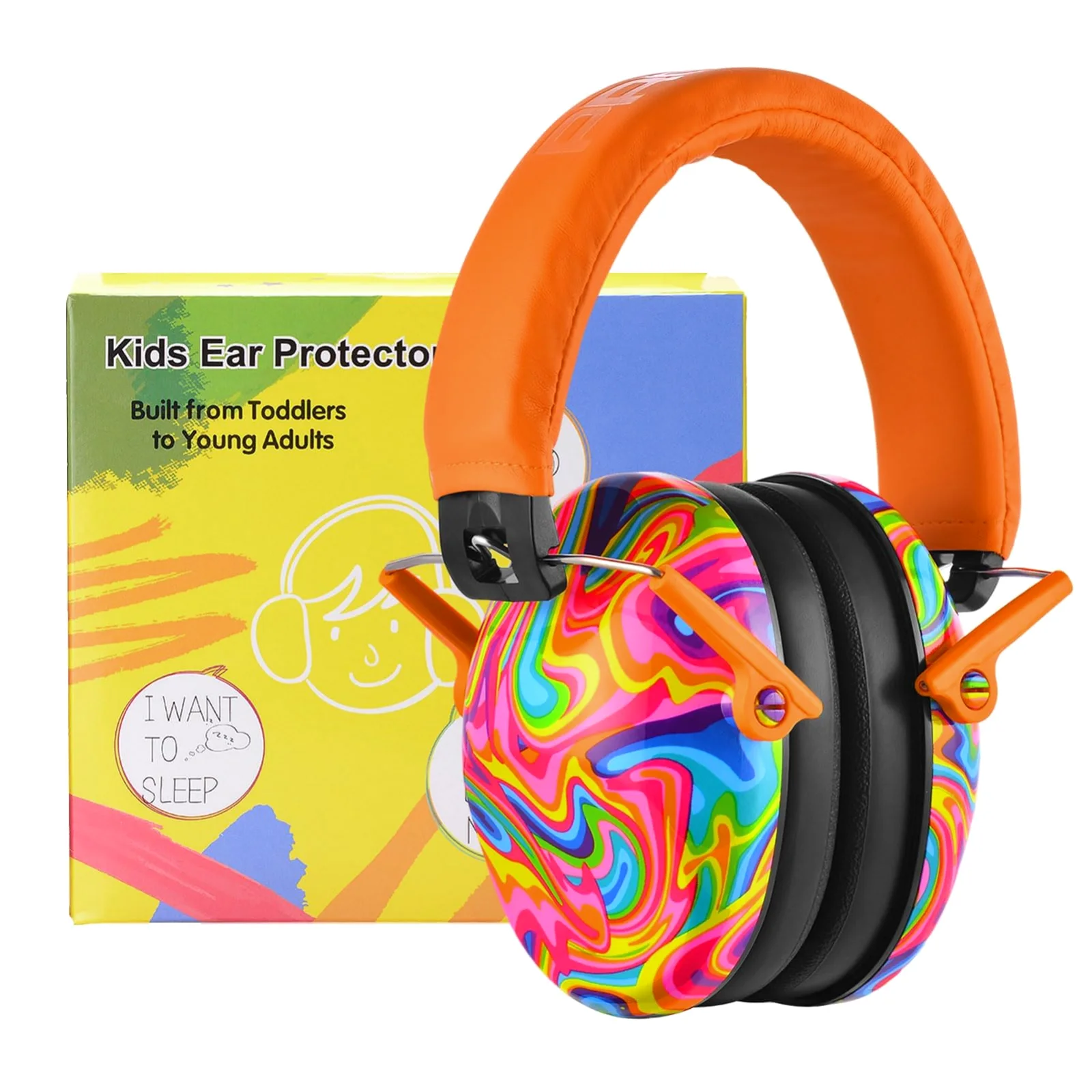 NRR25dB
from $12.99


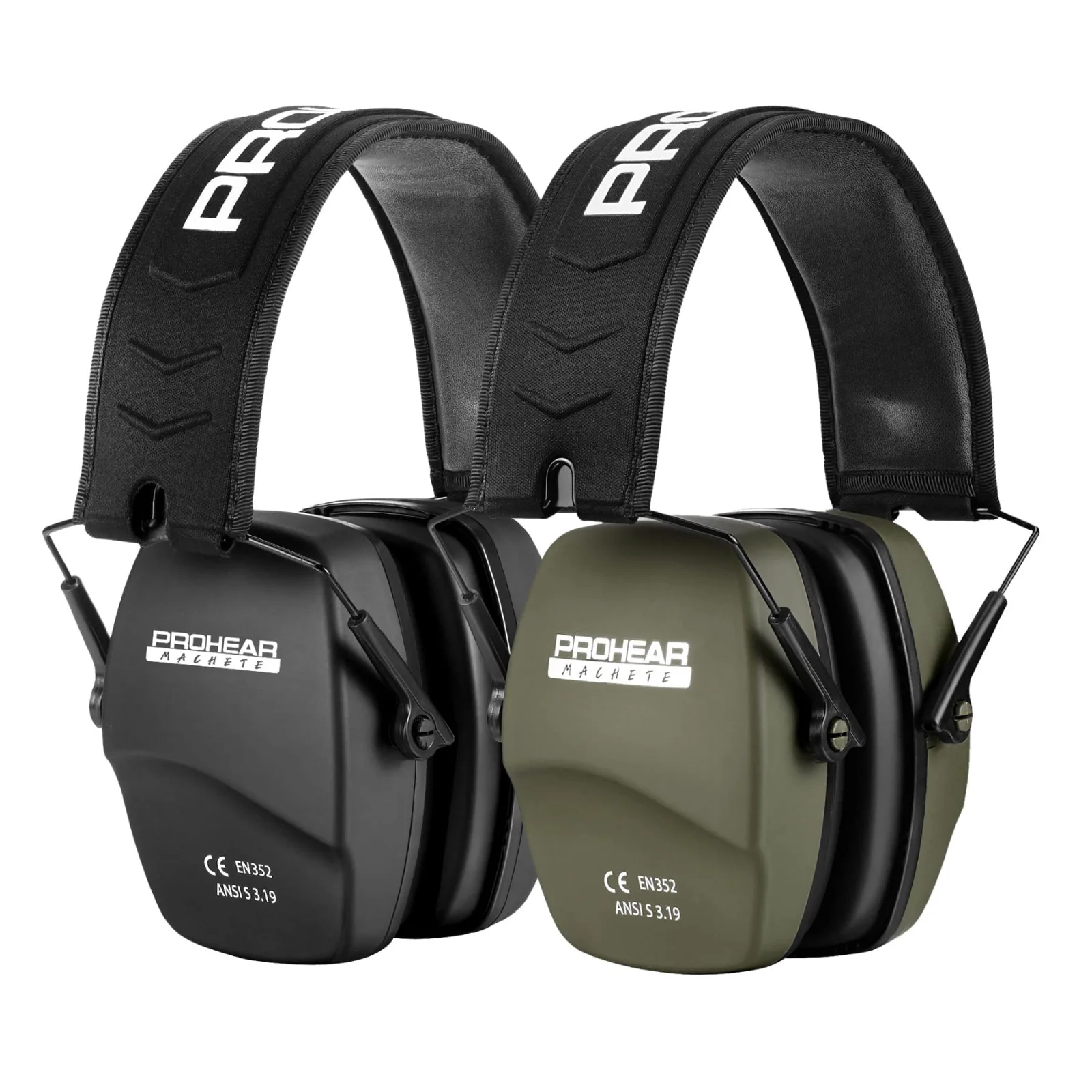 NRR26dB
from $17.86
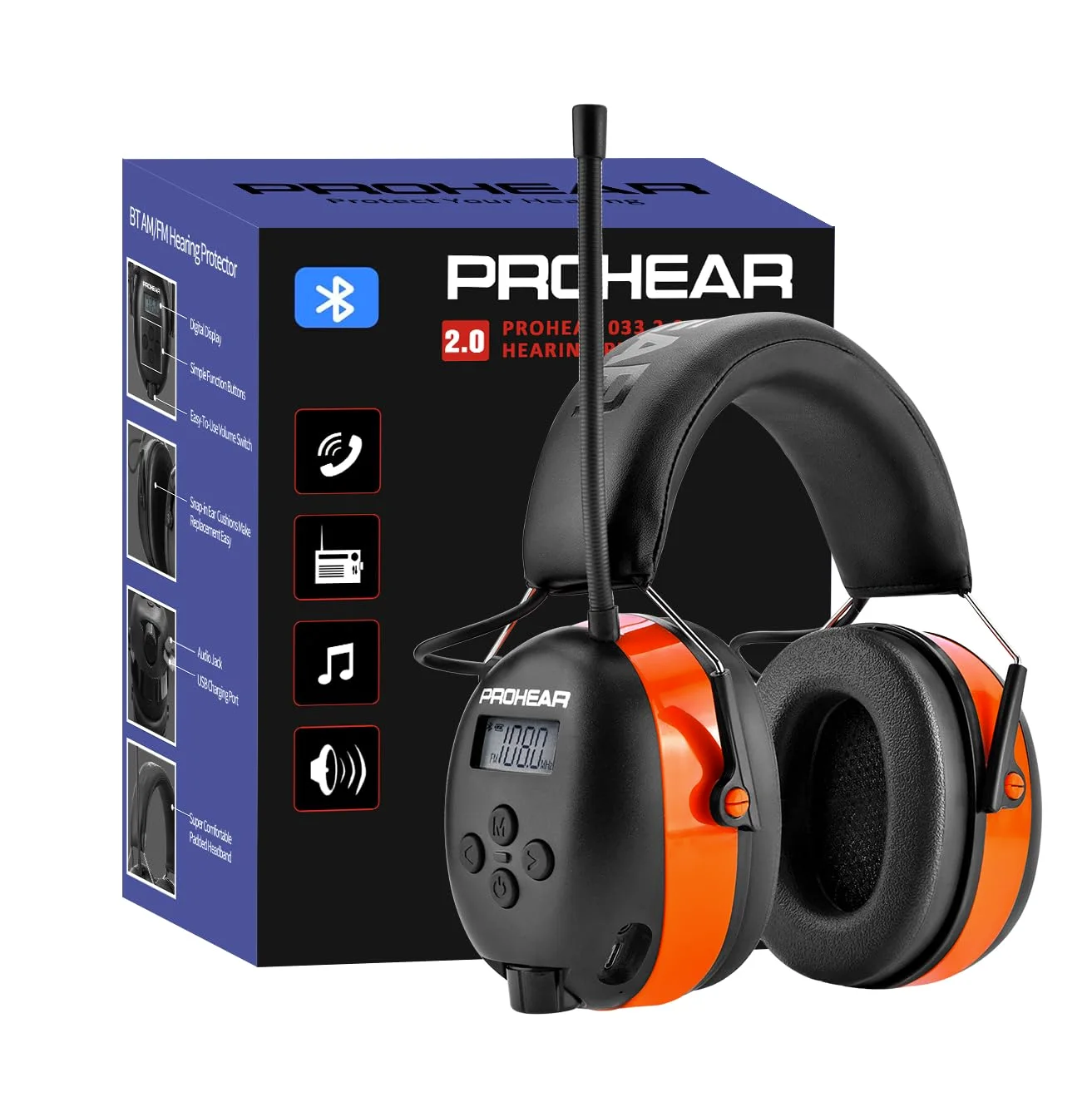 NRR25dB
AM/FM radio · Model 033
PROHEAR 033 Bluetooth AM/FM Radio Earmuffs
- Bluetooth 5.4
- AM/FM radio
- 1,500 mAh
from $71.99
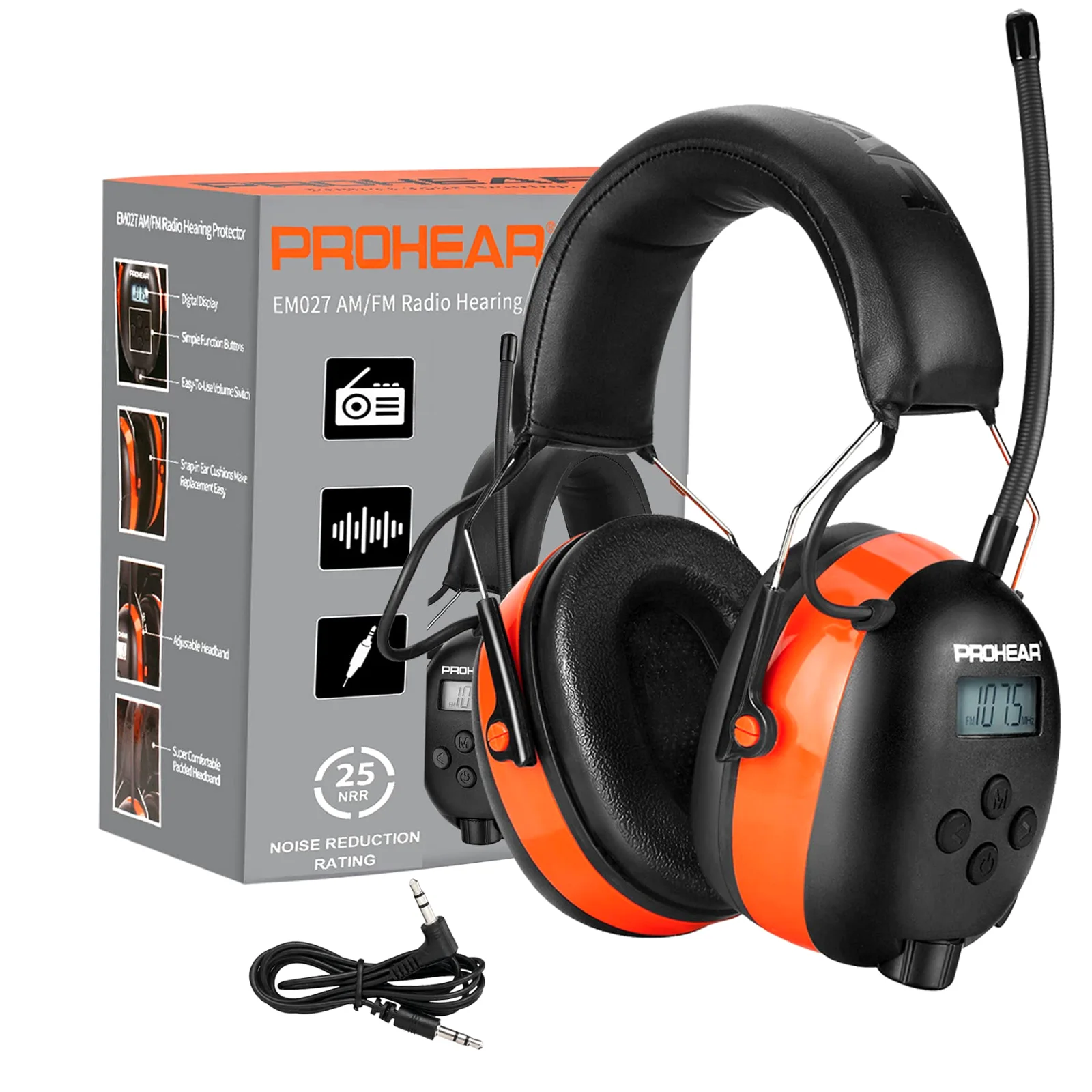 NRR25dB
from $46.99
Every model named above belongs to the PROHEAR family of earmuffs.
NRR explained: questions
Is a higher NRR always the better choice for you?
Not always. NIOSH says about 10 dB of real reduction usually does the job at work, and a muff that blocks too much tends to come off when someone talks to you. Pick enough protection for the loudest thing you do, then the one you will keep on.
Can you add the NRR of plugs and muffs?
No. OSHA's shipyard guidance adds 5 dB to the rating of the more protective device when the two are worn together.
Does the NRR on PROHEAR earmuffs come from a lab test?
Yes. The rating is the figure printed for each model, measured to ANSI S3.19-1974 as the EPA label requires. Your own protection depends on fit.