

Yard
How loud is a lawn mower, and how long your ears can take it
CDC puts mowers at 80 to 100 dB. NIOSH halves the safe time for every 3 dB. An hour in the yard can be a full day’s dose.
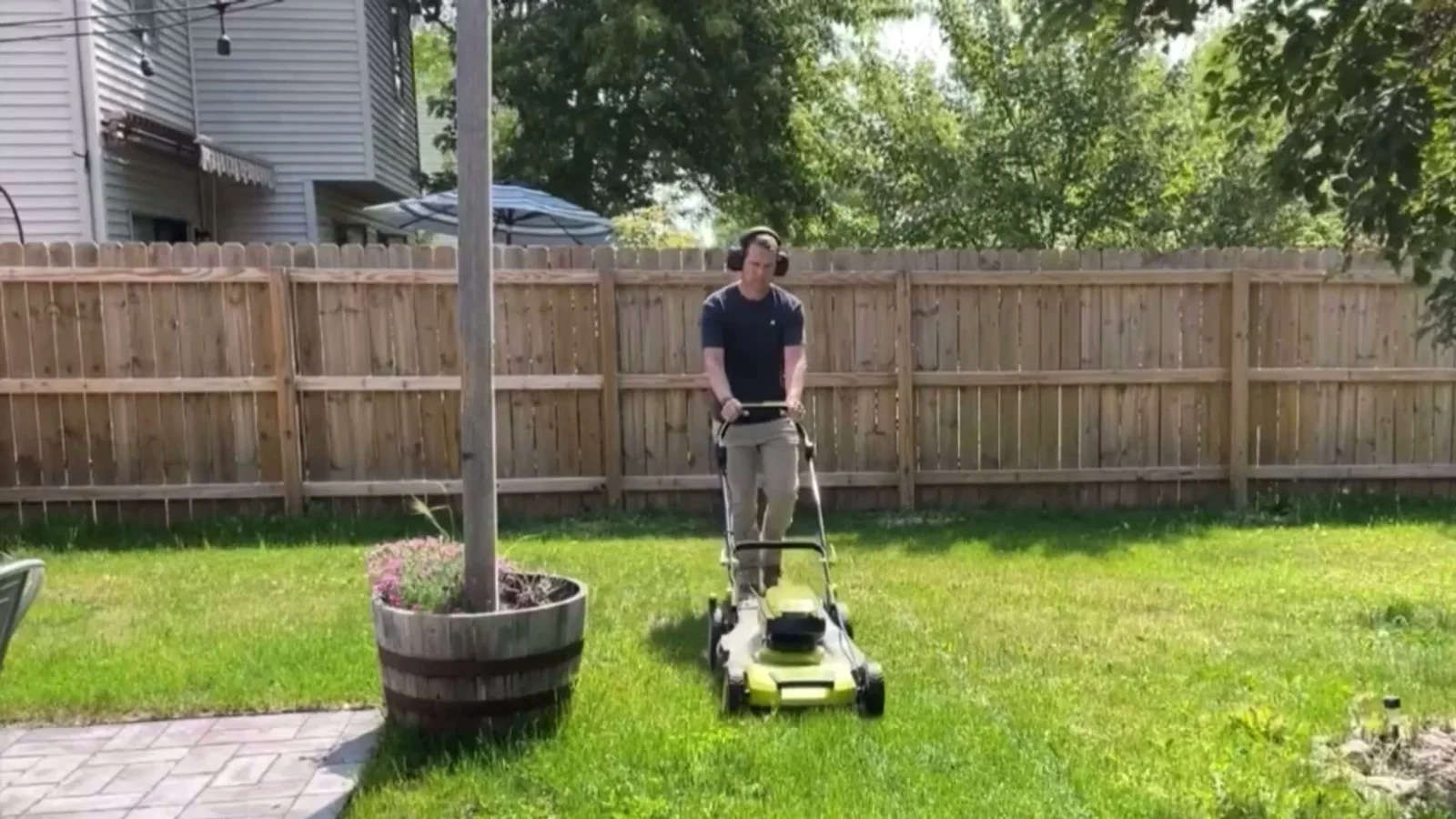
A mower does not sound dangerous. It hums, you get used to it, and an hour later you notice the house sounds muffled. That dull sound is your ears recovering, and it is the reason to wear something on Saturday morning.
How loud a mower is
CDC's Listen Up page puts lawn mowers at 80 to 100 dB. A riding mower with the deck engaged and a gas push mower with a tired muffler both sit in the upper half of that range. Add a string trimmer and a leaf blower and the morning stays there.
NIDCD draws the line where harm starts: sounds at or below 70 dBA are unlikely to damage hearing, and sounds at 85 dBA and above can, over time.
Level and time
The workplace limits are the clearest way to read those numbers. NIOSH recommends 85 dBA as the limit for an eight-hour day and halves the allowed time for every 3 dB more. The halving adds up fast.
| Level (dBA) | Allowed time | Where you meet it |
|---|---|---|
| 85 | 8 hours | a busy shop |
| 88 | 4 hours | a quiet mower |
| 91 | 2 hours | a typical push mower |
| 94 | 1 hour | a loud mower or blower |
| 97 | 30 minutes | mower and trimmer together |
The right-hand column is ours, an illustration inside CDC's 80 to 100 dB range, not a measurement of a particular machine. The left two columns are NIOSH's. Read across and an hour of loud mowing is a full day's dose.
How much protection is enough
More is not always better. NIOSH's tips for choosing a protector say about 10 dB of real reduction is usually enough at work, and that people take off protection that blocks too much. For a mower you want enough to get under 85 dBA, with a margin, and something you will keep on.
OSHA's Appendix B gives the arithmetic for A-weighted readings: subtract 7 dB from the NRR, then subtract the result from the noise. A muff rated NRR 28 against a 95 dBA mower: 28 minus 7 is 21, and 95 minus 21 leaves about 74 dBA at the ear, if the seal is good.
Passive or Bluetooth
A passive muff such as our 038 has no battery and goes on in five seconds. It is the one to keep by the garage door. If the yard takes all afternoon, a Bluetooth muff makes the time pass. The cups block the engine first and the music plays inside the seal, so you can keep the volume low.
Keep it low. Music turned up to drown out the engine adds to the dose instead of replacing it.
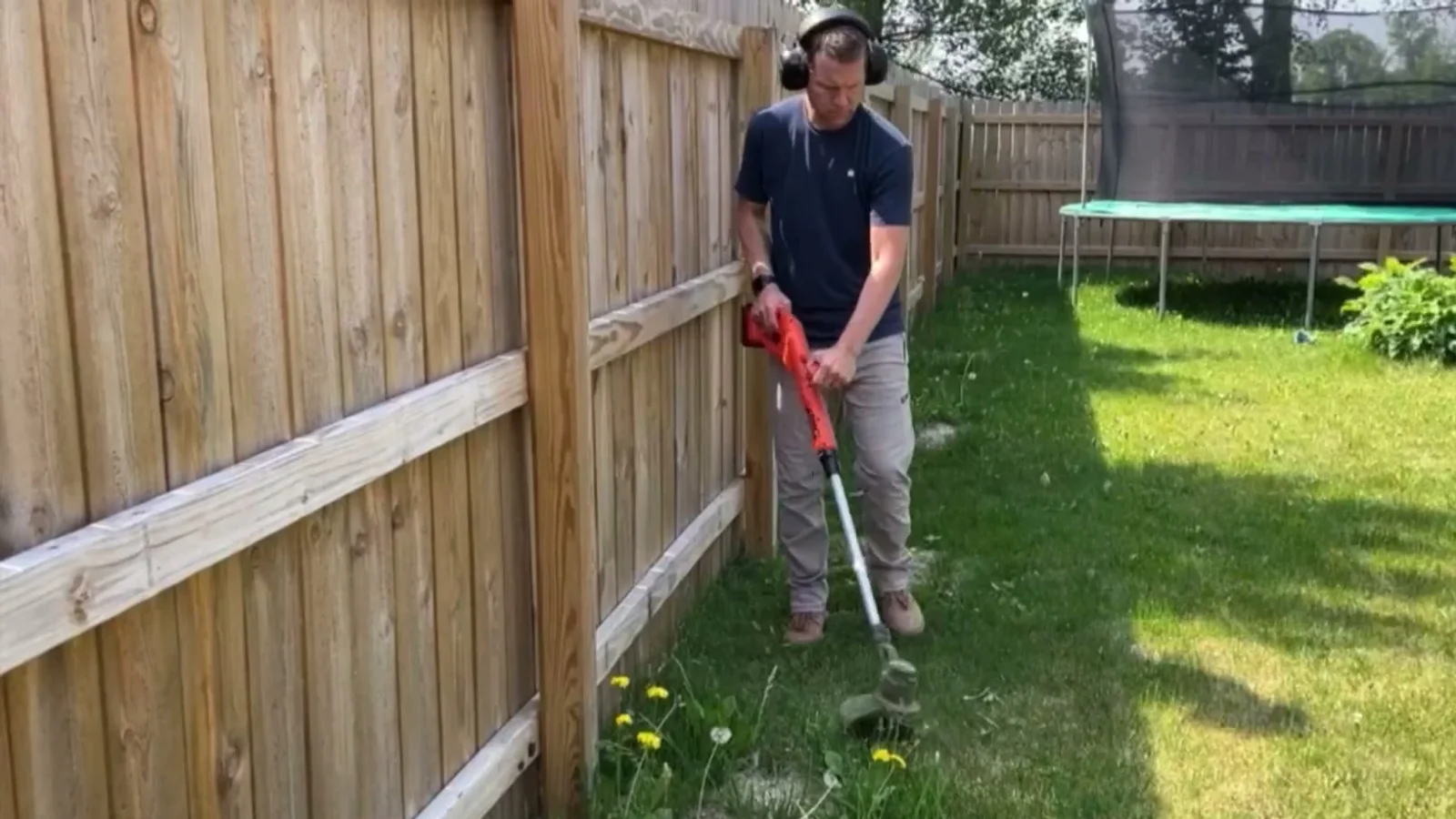
Keep the muffs where the mower is
Most people skip ear protection in the yard for one reason: the muffs are in the house and the mower is already running. Hang a pair on a hook by the garage door, next to the gloves and the safety glasses. If two people share the yard work, keep two pairs, so nobody waits.
Kids who help with the yard need their own small pair. An adult muff slides off a child's head and lets the noise in around the edge. Our kids ear protection comes in small sizes for exactly that.
The same habit helps in the shop. A table saw, a router and a shop vacuum sit in the same loud band as the mower, and a muff on the bench gets worn more than a muff in a drawer. The work and yard guide lists the agency limits for a full workday.
Small things that break the seal
- Sunglasses with thick arms: tuck them under the cushion or try gel pads.
- A cap pushed down over the band: wear the band behind the head or over the cap.
- Long hair under the cushions: pull it behind the ears.
- Flat, cracked pads: snap-in replacements cost less than a new muff.
Five seconds to put the muffs on, and the house sounds normal when you come back inside. That is the whole trade.
Written by the PROHEAR catalog desk.